
Domestic Heating Oil Tank
Specialists
Installation
Maintenance
Replacement
Why Work With Us
Professional
20+ years experience
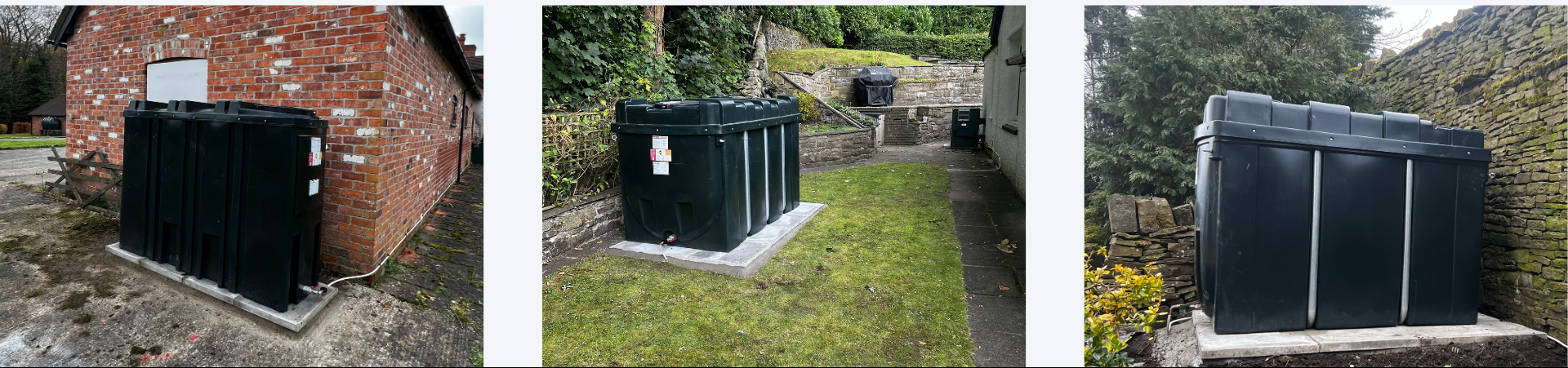
Our family firm has specialised in this Oil Tank Replacement for Over 20 years
Local
We fit, maintain and replace tanks throughout Cumbria and surrounding areas, including Cheshire
Experience
We are fully qualified., and
able to advise on the best solution for your unique needs.
Get in touch now
Price
Get your no-obligation, free quote now.
We’ll help you find a solution that works for your pocket
Client Testimonials

“We had a tank fitted by this firm and very pleased with the work carried out. The guys were polite, friendly and efficient. They answered all questions and explained all points. We would definitely recommend them..”
Rachael Mcnulty
“A great service – fitted my new tank very quickly with the minimum of disruption”
Moira Griffiths
“Fantastic Service from Rob and his team. New tank supplied for a very reasonable price and the old tank removed. Simple!”
Spencer S
FAQ’s
When should I replace my oil tank?
Signs that your oil tank may need replacement include:
- 2 pence sized blisters in the paint, especially on the tank’s underside.
- Pinhole leaks caused by internal rusting.
- Visible corrosion on the tank’s exterior.
- Evidence of spills around the tank.
- Plastic tanks signs of hairline cracks and fading
What is the typical lifespan of an oil tank?
The lifespan of an oil tank can vary
- Aboveground tanks typically last around 20 years.
- Underground tanks (USTs) also have a lifespan of about 20 years.
- Newer tanks may have varying lifespans depending on their construction and maintenance, ranging from 10 to 30 years.
What are the steps involved in replacing an oil tank?
The oil tank replacement process generally includes:
- Pumping out the existing oil/fuel to a temporary holding tank.
- Removing the old, redundant tank.
- Installing a new tank and tank base.
- Connecting the new tank to the existing oil/fuel feed pipe.
- Pumping the oil/fuel from the temporary holding tank into the new tank.
- Bleeding the oil/fuel feed pipe and testing the system.
- Removing all materials and waste to ensure the site is clean upon completion.
How much does it cost to replace an oil tank?
The cost of replacing an oil tank can vary based on several factors, including:
- The size and type of the tank.
- The complexity of the installation.
- The need for additional services such as tank removal and site cleanup.
- Your geographic location. On average, replacement costs in the UK can range from £1,000 to £4,000.
What regulations must I follow when installing or replacing an oil tank?
In the UK, oil tank installations must comply with local building or OFTEC regulations , including:
- The tank must be at least 760mm from a boundary
- It must be 1.8m from non-fire rated buildings and structures, openings such as doors and windows, and the oil boiler’s flue terminal.
- It must be 50 metres away from a spring, well, or borehole, and 10 metres away from a watercourse such as a river, stream, pond, or drain.
Do I need planning permission to install a new oil tank?
Generally, you do not need planning permission if:
- The tank isn’t located in front of the main elevation fronting a highway.
- It’s no higher than 3m.
- Its total height is no more than 2.5m if it’s within 2m of a boundary
- However, if your house is a listed building, you will need planning permission.
What is a bunded oil tank and do I need one?
A bunded oil tank is a tank within a tank.
The inner tank holds the oil, while the outer tank provides protection. This design helps contain any spills and offers additional environmental protection.
Bunded tanks are often required if:
- Your tank is located in a place where spills could enter watercourses or drains.
- Your tank can hold more than 3,500 litres of oil in England or more than 2,500 litres in Scotland.
How can I maintain my oil storage tank?
Proper maintenance of your oil storage tank includes:
- Regular inspections for signs of damage or corrosion.
- Keeping the area around the tank clean and free of debris.
- Following the manufacturer’s recommended maintenance schedule.
- Having the tank professionally inspected and serviced annually by an OFTEC registered technician.
Can I install my oil tank myself?
While it is possible to install an oil tank yourself, it is highly recommended to hire a professional. Self-installation can increase the risk of oil leaks and spills. An OFTEC registered technician can ensure that the installation complies with all relevant regulations and standards.
What should I do if I notice a leak or damage to my oil tank?
If you notice any signs of a leak or damage, it is crucial to contact a professional immediately. Leaks can cause significant environmental damage and may result in hefty fines. Regular inspections and maintenance can help prevent such issues.